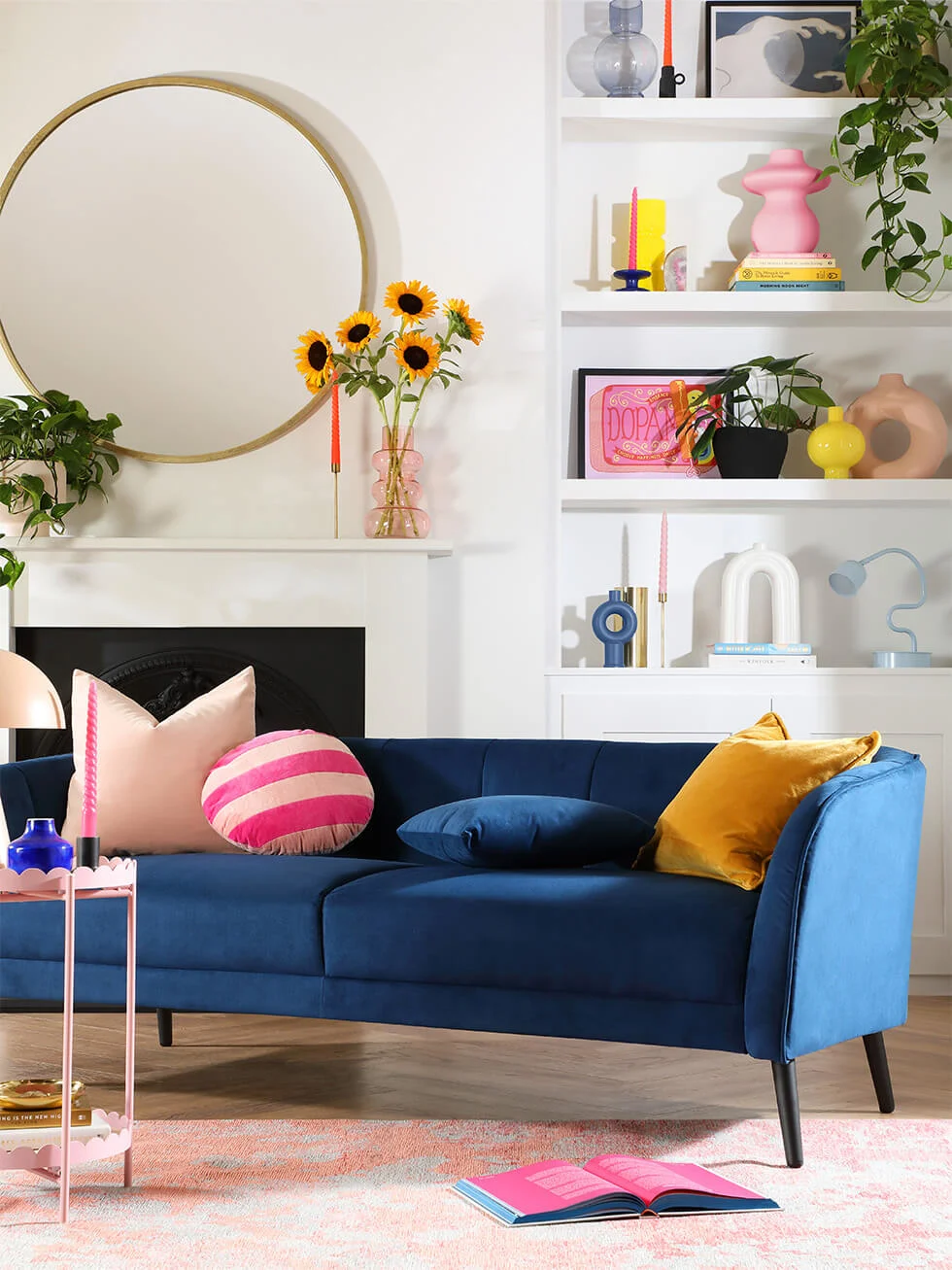
Discover large and long living room ideas to make the most of your space, with practical layout tips, furniture inspiration and easy styling hints.
Depending on the size and layout of your living room, it can feel challenging to decorate and furnish. When it comes to large living rooms, the space may feel overwhelming and empty if styled wrongly. For long or narrow living rooms, choosing the wrong size furniture may make the room feel disproportionate.
However, when styled properly with the right furniture arrangement and know-how, large and long living rooms can feel balanced, cosy and functional.
From how to create separate zones to furniture arrangement and styling tips, discover these practical ideas for large and long living rooms. Once you’re done reading our guide, check out ourbestselling sofas to elevate your living room space.
A large living room can feel more inviting and purposeful when you create zones. For example, you can divide a large living room with an open plan layout into different zones - the main seating area, reading nook or home office.
The easiest way to create zones is through furniture arrangement. Use rugs to outline these zones, like choosing a large rug for the main area with a sofa and a smaller rug for the home office.
The concept of ‘floating’ is when you don’t place your furniture up against the wall but instead arrange it in the middle of the room. For example, place your sofa in the centre of the room to face the TV or fireplace.
A ‘floating’ sofa will form ‘lanes’, making it easy to walk through a large or long living room. Similar to zoning, floating furniture creates key areas in the home. It also frees up wall space, making it easy to decorate with artwork or introduce wall panelling.
Choosing the right sofa is essential for large and long living rooms. A sofa that’s too small will make the room feel unbalanced and disproportionate. On the other hand, choosing a sofa that’s too large for long and narrow living rooms will overwhelm the space. Here are a few things to consider when choosing a sofa for the living room:
The living room layout and dimensions: Take down the measurements and compare with the sofa you have your eye on
The traffic flow of the room: Make sure the sofa doesn’t block the entrance or exit
The lifestyle you lead: Do you regularly have people over? A bigger sofa may be needed for more seats, or get 2 matching sofas
When it comes to the type of sofa, these are a few picks for large living rooms:
Corner sofas: Add more seats and help create zones for open plan layouts
Modular sofas: Provide flexibility depending on the layout
Sofas with a slim profile: Ideal for long and narrow living rooms
3 seater sofa and 2 armchairs: If you prefer the traditional sofa style but want to add more seats
The common issue with having a long (and narrow) living room layout is that the space can feel like a ‘bowling alley’. To prevent that from happening, split the living room into different zones.
For long living rooms, group the sofa, coffee table and TV in one zone, and you have the option of turning the other area into a totally different space. This can be a reading or study corner, breakfast nook or seating area for guests. You can divide the space with shelving or by simply arranging furniture in groups, like having the sofa facing away from the study table.
Large living rooms, if not styled properly, can feel cold and uninviting if there’s too much bare space. Introducing different textures will help liven up the room and also make the space feel softer and more welcoming.
To start, think about the textures of the key pieces first, like your sofa or curtains, and then build from there. Think about the mood you would like to set in your living room; comfort is always a priority. Choose inviting textures like velvet or plush fabric for your sofa and cotton, linen or chenille fabric for curtains. It’s important to think about the functionality of your fabrics - will the textures warm up your home in winter? Or cool down the room in summer?
Do you have a corner in your living room that you’re thinking of updating? Transforming it into its own space will add a touch of personality or help make the space more functional. If you’re thinking of what to turn it into, a good tip is to transform it based on your interests and lifestyle.
This could be updating the corner into a cosy reading nook with an armchair and bookshelves. Or if you love indoor gardening, a vibrant space to display your houseplants. For those who regularly entertain, introducing a drinks cabinet or bar cart might be a way to go along with a few comfy armchairs. Another fun idea would be to turn the corner into a mini lounge to listen to music. If you love vinyls or have an analogue CD player, this just might be up your alley.
A focal point is the key element of the living room and one that anchors the space. To put it simply, it’s the first thing that catches the eye when you walk into the living room. The focal point could be the fireplace, the TV or the outside view. The focal point is essential when it comes to your living room layout and furniture arrangement. The key pieces of furniture such as your sofa, should be facing your focal point to give the living room a natural flow.
Having just one type of lighting in a large or long living room will make the space feel flat or dull. Similar to creating zones with furniture, lighting plays a big role in highlighting different areas of the living room and setting the mood.
These are the different types of lighting you can consider for a large living room:
Task lighting - lighting for everyday activities
Bias lighting - helps avoid the glare of the TV screen
Accent lighting - highlights specific areas of a room such as artwork or shelf display
Ambient lighting - choose lighting like floor lamps to set the vibe of the space
Aside from lighting, always take advantage of any natural light that comes into your living room as it will make your space feel more airy, bright, and inviting.
9. Tie the room together with a consistent colour palette
Having a consistent colour palette is one of the easiest ways to tie large and long living rooms together. For living rooms that have been divided into different zones, choose a similar colour palette for all zones.
For example, going for an earthy colour palette creates a calming backdrop and a relaxing visual flow. If you don’t want it to be too uniform, repeating accent colours through cushions, artwork and accessories instead of the same wall colour allows you to experiment while still keeping it cohesive.
FAQs
What colours make a long living room feel bigger?
Choosing lighter or cooler tones will make the living room feel more open and airy. Go for light blues, soft greens or blush pinks are great picks and invite the opportunity to colour drench.
What size rug is needed for a long living room?
This depends on the length of your living room and the layout of your space. Measuring the living room will help you decide what size rug is needed. For living rooms that have not been broken up into different zones, a large rug will be the main anchor for the sofa and coffee table. For living rooms that have been split into different zones, choose two smaller rugs to divide the space.
How do you make a long living room feel cosy?
Choose comforting textures and do not push furniture against the wall. Soft upholstery, cosy accessories and artwork help make the space feel more inviting. Floating furniture in the middle of the room frees up wall space and makes long and narrow living rooms feel bigger.
We hope you enjoyed reading our large and long living room ideas. Want to read more inspiration articles like this? Check out our cosy living room ideas guide for more ideas.